
Solar Installation in North Carolina
Why the License Matters Here
In North Carolina, an electrical contractor licence is not a credential a company displays for reassurance. Under N.C.G.S. 87-43, solar photovoltaic installations of any value require one, and the licence is what makes your contract enforceable in the first place.
You can verify any contractor’s licence directly with the North Carolina Board of Examiners of Electrical Contractors, and it takes a few minutes. We would rather you did that than took our word for it.

The Federal Tax Credit has Ended
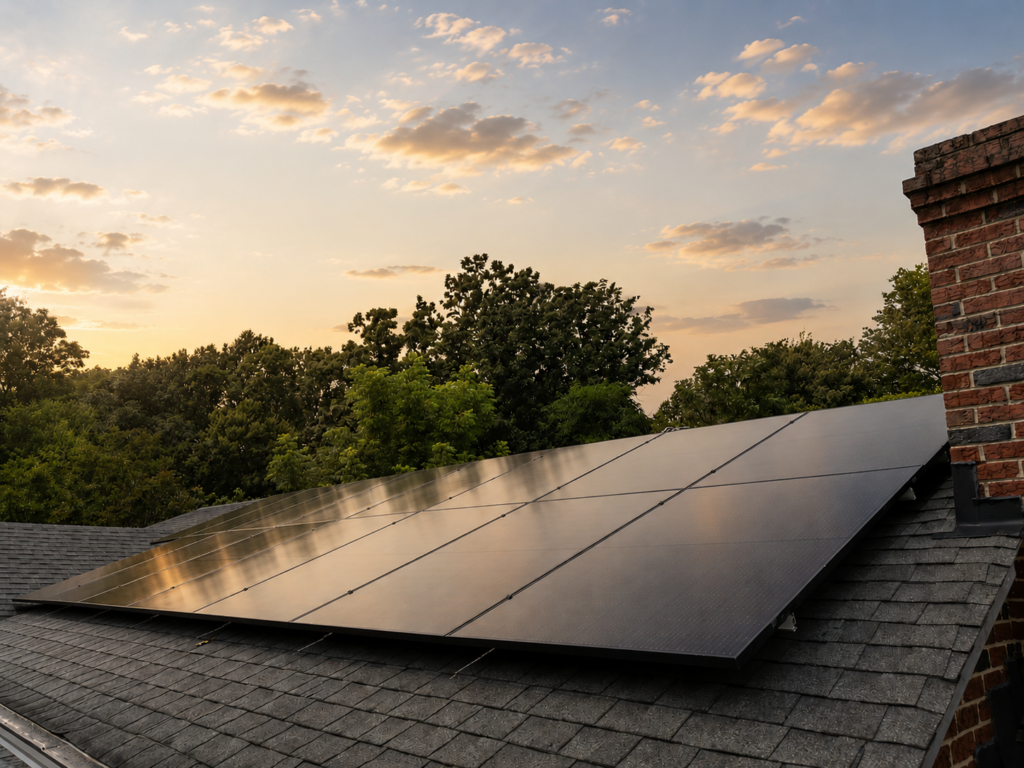
Section 25D, the 30% federal residential solar tax credit, expired on 31 December 2025 under the One Big Beautiful Bill Act. Homeowners buying a system in 2026 receive no federal credit. Section 48E remains for system owners, which in a residential context means a lease or PPA provider rather than you.
North Carolina does not offer a residential state solar tax credit. Which makes the rate structure below the thing that actually determines your economics.
Rider NM, Rider NMB and Rider RSC, explained properly
Everything in this section comes from the North Carolina Utilities Commission Public Staff, citing the Commission’s order in Docket No. E-100 Sub 180, issued 23 March 2023 and resulting from legislation at N.C.G.S. section 62-126.4.
Rider RSC, Residential Solar Choice
This is the default rider. It introduces a minimum monthly bill, non-bypassable charges covering storm recovery and cyber security costs, and a grid access fee for systems larger than 15 kW AC. It requires you to take service on a Time-Of-Use with Critical Peak Pricing rate schedule. Net exports are credited each month at the utility’s avoided cost rate.


Rider NMB, Net Metering Bridge
Rider NMB came out of a stipulation between Duke Energy and several rooftop solar installers. It is similar to Rider RSC with one significant difference: customers are not required to take service under Time-Of-Use with Critical Peak Pricing.
Rider NMB is open to a limited number of customers each year. Once that annual limit is reached, new customers must take Rider RSC instead. Customers can stay on Rider NMB for up to fifteen years from the date of their interconnection request application, after which they move to Rider RSC or whatever tariff applies then.
The practical point is that Rider NMB availability is capped annually rather than running to a fixed calendar date. If it matters to you, the timing of your interconnection request is what determines it, and there is no way to know in advance exactly when a year’s allocation fills.
The Legacy Rider is Closed
Rider NM, the old residential net metering rider, closed to new customers on 30 September 2023. If you are shopping for solar now, this rider is not available to you.
Customers already on it continue until 31 December 2026, at which point they transition automatically onto Rider NMB.

What Net Metering Credits Can and Cannot Offset
Under both Rider NMB and Rider RSC, energy you export each month is credited at the Net Excess Energy Credit rate, which is based on the utility’s avoided costs. The current rate is published on your applicable rider and it changes, so we will read you the live figure rather than quoting one here that may be out of date by the time you read this.
The credit applies primarily to kilowatt-hour charges. It cannot offset the fixed customer charge or the Renewable Energy Portfolio Standard charge on your bill. Both revised riders also carry a monthly minimum bill reflecting the fixed cost of serving a net metering customer, and the non-bypassable storm recovery and cyber security charges count toward that minimum.
This is the part that surprises people. Solar in North Carolina reduces your bill. It does not zero it, and the structure is designed so that it cannot.
System Size Limits
North Carolina law allows you to generate your own electricity to offset part or all of your own needs, not to sell power to the utility. The facility must have a capacity of 20 kW AC or less for residential customers, and 1 MW AC or less for non-residential.
It must interconnect under the current generator interconnection standard and operate in parallel with the utility’s distribution system.
If You are Served by a Cooperative or a Municipal Utility
The rates of rural electric cooperatives and municipal electric utilities are not regulated by the North Carolina Utilities Commission. They are not required to offer net metering, though some do. If your power comes from a co-op or a town utility rather than Duke, contact them before anything else, because none of the rider structure above applies to you.
Licensing, Permitting, and the Structural Engineer Rule
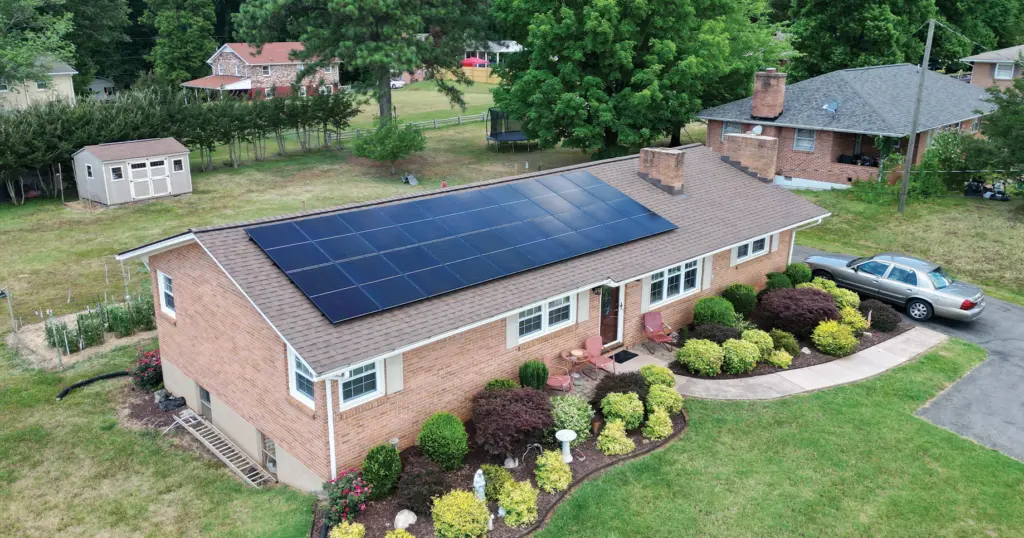
This section reflects the Solar Panel Installation Licensing and Permitting Guidelines published jointly by the North Carolina Board of Examiners of Electrical Contractors, the North Carolina Licensing Board for General Contractors and the North Carolina Department of Insurance.

Licensing
Under N.C.G.S. 87-43, solar photovoltaic installations of any value require an electrical contractor licence. Classification tiers are set by project value: installations at $60,000 or less may be contracted under a limited, intermediate or unlimited licence, installations at $150,000 or less require intermediate or unlimited, and anything above $150,000 requires an unlimited licence.
The Licensing Board for General Contractors treats solar installations as electrical work unless the scope includes structural or other improvements of $30,000 or more that are typically performed by licensed general contractors. Permits can be issued to a licensed electrician as the responsible party, and under N.C.G.S. 87-1.1 a general contractor may act as a subcontractor to that electrician.
A building permit is required for any project at a cost of $20,000 in North Carolina.
The Structural Engineer Requirement
The North Carolina Department of Insurance guidance on inspection procedures for rooftop solar states that its provisions are not optional, and that all inspection departments across the state should be issuing permits and inspecting to it.
Structural design by a Professional Engineer is required where any of the following applies
- The weight of the PV system exceeds 3 pounds per square foot
- The roof has more than one layer of asphalt shingles
- The roofing material is something other than asphalt shingles
- The roof is in a 140 mph or greater wind zone

Any of those four means an engineer, which affects both cost and timeline. We check them at survey rather than discovering one at permit stage. The second one catches people out most often, because a second layer of shingles is not visible from the ground.
Applications also require a sketch of the electrical design complying with the National Electrical Code and a sketch of the structural mounting design.
What we install
- Residential solar, roof and ground mounted.
- Commercial solar.
- Battery backup, including Tesla Powerwall and SolarEdge storage.
- Detach and reset, taking an existing array off for a roof replacement and putting it back.
- Service and repair on existing systems, including systems we did not install
- EV charger installation.
- Energy efficiency work: insulation, air sealing and attic ventilation.
Every item on that list is done by our own crews under WV064401. Nothing gets handed to a subcontractor you have never met.
Question North Carolina Homeowners Ask
Not for homeowners. Section 25D expired on 31 December 2025.
Rider NMB lets you stay on a standard residential rate schedule. Rider RSC requires Time-Of-Use with Critical Peak Pricing. Otherwise they are similar. Rider NMB is capped at a limited number of customers each year.
Up to fifteen years from the date of your interconnection request application, after which you move to Rider RSC or whatever tariff is in effect.
No. The credit applies mainly to kilowatt-hour charges and cannot offset the fixed customer charge or the Renewable Energy Portfolio Standard charge, and both revised riders carry a monthly minimum bill.
20 kW AC or less for a residential customer.
No, not on its own. A grid-tied system goes offline in an outage to protect line workers. Battery storage with a transfer switch is what keeps the house powered.
Possibly. It is required if the system weighs more than 3 pounds per square foot, if the roof has more than one layer of asphalt shingles, if the roofing is not asphalt shingle, or if the roof is in a 140 mph or greater wind zone. We check at survey.