Costs and Long-Term Benefits of Residential Solar Systems

How Much Do Solar Panels Cost in Virginia in 2026?

One of the most common questions homeowners ask us is “how much does solar cost?” In 2026, most residential solar systems in Virginia cost between $2.42 and $3.00 per watt installed, before any incentives. For a typical 10 kW home system, that puts the cost of solar panels in Virginia at roughly $24,200 to $30,000. Because the 30% federal tax credit ended on 31 December 2025, that is also close to what a homeowner who buys a system pays today. Your own price depends on your home: how much electricity you use, the shape and condition of your roof, the inverter and battery you choose, and how much energy efficiency work we can do first. The sections below show typical prices by system size, what moves the number up or down, and a worked payback example under 2026 rules. There is no way to price a solar system accurately from square footage and a power bill alone, which is why every Earth Right quote starts with a no-cost home energy assessment. If your home is a good fit for solar, the long-term savings usually outweigh the upfront cost. If it is not, we will tell you.

Solar Panel Cost in Virginia by System Size

The table below shows the residential solar panel cost for common system sizes, using the $2.42 to $3.00 per watt installed range we see on Virginia homes in 2026. Independent price trackers report a similar Virginia average; EnergySage put it at about $2.42 to $2.59 per watt in mid-2026. It is a quick way to estimate the average cost of solar panels for a house before you get a quote.

System sizeYearly production (approx.)Installed cost before incentives
6 kW7,500 kWh$14,520 to $18,000
8 kW10,000 kWh$19,360 to $24,000
10 kW12,500 kWh$24,200 to $30,000
12 kW15,000 kWh$29,040 to $36,000
14 kW17,500 kWh$33,880 to $42,000

Most Virginia homes we work on need a system between 10 kW and 14 kW. These prices do not include battery storage, a main electrical panel upgrade or roof work, which are priced separately. Production assumes about 1,250 kWh per installed kW each year, typical for an unshaded, south-facing roof in central Virginia.

What Moves the Price of a Solar System

Two homes on the same street can get very different quotes. These are the factors that change the price most:
  • Your electricity use. A home that uses more power needs a bigger system. Getting the size right matters more than ever in Virginia, as we explain in sizing your solar system.
  • Your roof. Steep pitches, several roof faces and shading add design and labor time. If your roof has only a few years left, it is usually cheaper to replace it first than to pay for solar panel removal and reinstallation later.
  • The inverter. String inverters, optimizers and microinverters are priced differently. Our guide to solar inverters explains the trade-offs.
  • Battery storage. A battery adds to the project cost, often by $15,000 to $25,000 depending on capacity. See our battery backup options.
  • Electrical upgrades. Older main panels sometimes need replacing before solar can connect.
  • Energy efficiency. Cutting what your home wastes first means fewer panels for the same savings, which is why we often start with insulation, air sealing and attic ventilation.
  • Installation complexity. Ground mounts, long wire runs and trenching cost more than a simple roof install.

Solar Payback in Virginia Without the Federal Tax Credit

Your solar payback period is the number of years it takes for the money you save on electricity to equal what you paid for the system. With the federal credit gone, payback in Virginia is a little longer than many older articles suggest. Here is a worked example using 2026 rules.

AssumptionValue used
System size10 kW
Installed price$2.70 per watt, so $27,000, paid in cash
ProductionAbout 12,500 kWh in year one (1,250 kWh per kW)
Electricity rate15 cents per kWh in year one
Rate increases3% per year
Panel output loss0.5% per year
IncentivesNo federal credit. No property tax on the system. REC income not counted.
Under those assumptions the system saves about $1,875 in its first year and pays for itself in about 12.5 years. Over 25 years it saves around $63,900 on electricity, about $36,900 more than it cost. The same system bought in 2025 with the 30% credit would have paid back in about 9.1 years, so the end of the credit adds roughly three and a half years for a cash buyer.
If your electricity rate isPayback for the same $27,000 system
13 cents per kWhAbout 14.1 years
15 cents per kWhAbout 12.5 years
17 cents per kWhAbout 11.2 years
Your numbers will differ. A loan adds interest and stretches payback, although many homeowners pay about the same each month as their old power bill from day one. Shade, roof direction and your utility’s rates matter too. Under Virginia net metering, power beyond your own yearly usage is credited at a lower rate, so an oversized system pays back more slowly. Selling your renewable energy certificates shortens payback. If you are still deciding whether solar panels are worth it in Virginia.

Long-Term Savings with Solar

The first savings you see are on your power bill. When you go solar, energy from your panels replaces energy you would otherwise buy from Appalachian Power or Dominion. Every kilowatt-hour your system produces and your home uses is one you no longer pay for. If your system produces 500 kWh in a month and your home uses it, that is 500 kWh less on your bill.

When you go solar, your panels will provide most or all of the energy your home needs. This means that your power bill will be significantly reduced, or even eliminated. Most homeowners find that their total monthly energy payments after going solar (combined cost of their solar payments and their reduced power bill) are close to, or often less than, their monthly power bill before solar. Our goal is for solar to result in no added cost for you, and ideally cost less each month than you’re already paying for your utility bill.

Plus, your solar payment has a fixed rate. As Virginia utilities continue to raise their power rates, solar homeowners will find themselves paying less each month for solar than they would have been paying their utility company. These savings will build up over time, providing homeowners with significant return on investment (ROI).

Solar can also add to your home’s value when you sell. A 2019 Zillow study found that homes with solar sold for 4.1% more on average nationwide. Owned systems carry that value; leased systems usually do not. Our guide to how solar panels affect your home’s resale value covers the Virginia picture.

How Incentives Change the Cost of Solar in Virginia

Virginia’s incentives no longer cut the upfront price the way the federal credit did. They improve what the system earns over its life.
  • The federal tax credit has ended. The 30% residential clean energy credit (Section 25D) ended for systems installed after 31 December 2025. If you buy a system with cash or a loan in 2026, there is no federal credit. Under a lease or power purchase agreement the provider may claim a separate business credit, but you do not.
  • Net metering survived. In 2026 the State Corporation Commission kept the twelve-month netting period for Dominion customers, as it had for Appalachian Power customers, so power your panels send to the grid still offsets power you use later in the year. Generation beyond your yearly usage is credited at a lower rate, and residential net metering is capped at 25 kW. Our Virginia solar page covers both rulings, and net metering and state differences explains how netting works.
  • No property tax on the system. Under section 58.1-3661 of the Code of Virginia, residential solar systems of 25 kW DC or less are wholly exempt from state and local taxation.
  • Renewable energy certificates. Your system creates renewable energy certificates (RECs) as it produces power. Virginia does not have a separate SREC market; certificates are tracked in the PJM GATS registry and sold through a broker or aggregator, which requires a revenue-grade meter. We will tell you what the market looks like at your assessment.
For every program and the fine print, read our guide to Virginia solar incentives in 2026.

Solar Cost Questions Virginia Homeowners Ask

How much do solar panels cost in Virginia in 2026?

Most residential systems in Virginia cost between $2.42 and $3.00 per watt installed in 2026. A typical 10 kW system costs roughly $24,200 to $30,000 before incentives, and because the federal tax credit ended in 2025, a homeowner who buys a system pays close to that amount. Your price depends on system size, your roof, the equipment and whether you add a battery.

How long does it take solar panels to pay for themselves in Virginia?

For a cash purchase in 2026, payback in Virginia usually runs about 11 to 14 years, depending on your electricity rate, roof and system size. In our worked example, a 10 kW system costing $27,000 pays back in about 12.5 years at a 15 cent electricity rate. Panels are typically warrantied for 25 years or more, so most of their working life comes after payback.

Is there still a federal solar tax credit in 2026?

Not for homeowners who buy their own system. The 30% residential clean energy credit (Section 25D) ended on 31 December 2025, and systems had to be installed by that date to qualify. If your system was installed in 2025, speak to your tax preparer about claiming it. Lease and power purchase agreement providers may still claim a business credit, but that credit belongs to them, not to you.

Does Virginia have a state solar tax credit?

No. Virginia does not offer a state income tax credit for residential solar. What Virginia does offer is net metering through Appalachian Power and Dominion, a full property tax exemption for home systems of 25 kW DC or less, and the option to sell the renewable energy certificates your system produces.

Do solar panels increase home value?

Owned solar systems generally do. A 2019 Zillow study found that homes with solar sold for 4.1% more on average nationwide, and many buyers value lower power bills. Leased systems usually do not add the same value and can complicate a sale. Keep your installation records, warranties and production history to show buyers and appraisers.

Will solar panels raise my property taxes in Virginia?

Not on a typical home system. Under Virginia law, residential solar systems of 25 kW DC or less are wholly exempt from state and local taxation. For larger systems the exemption depends on whether your county or city has adopted an ordinance, so check with your commissioner of the revenue.

Does adding a battery change the cost of solar?

Yes. A battery adds to the upfront cost, often by $15,000 to $25,000 depending on capacity, and it usually lengthens payback. Most homeowners add a battery for backup power during outages rather than for savings. A battery can usually be added to an existing solar system later.

Get a Solar Price for Your Home

The fastest way to know what solar would cost and save on your home is a no-cost assessment. We look at your roof, your electrical panel, your shading and twelve months of your bills, then give you a price and a payback estimate under the rules as they are today. Book your no-cost solar assessment or call 434-661-5656.
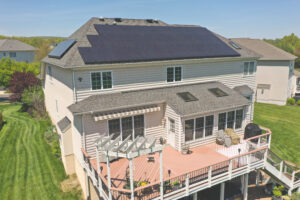
Aerial view of rooftop solar panels after ten years of use
Home with lights on at night during a power outage
Solar panels on a Virginia home that adds resale value
Completed residential solar installation in Altavista, Virginia
Call Us