Solar Incentives for
Virginia Homeowners in 2026

The rules changed at the end of 2025, and a lot of what is still written about solar incentives online describes a world that no longer exists. If you are pricing a system in Virginia this year, here is what actually applies, what went away, and which parts depend on who your utility is.

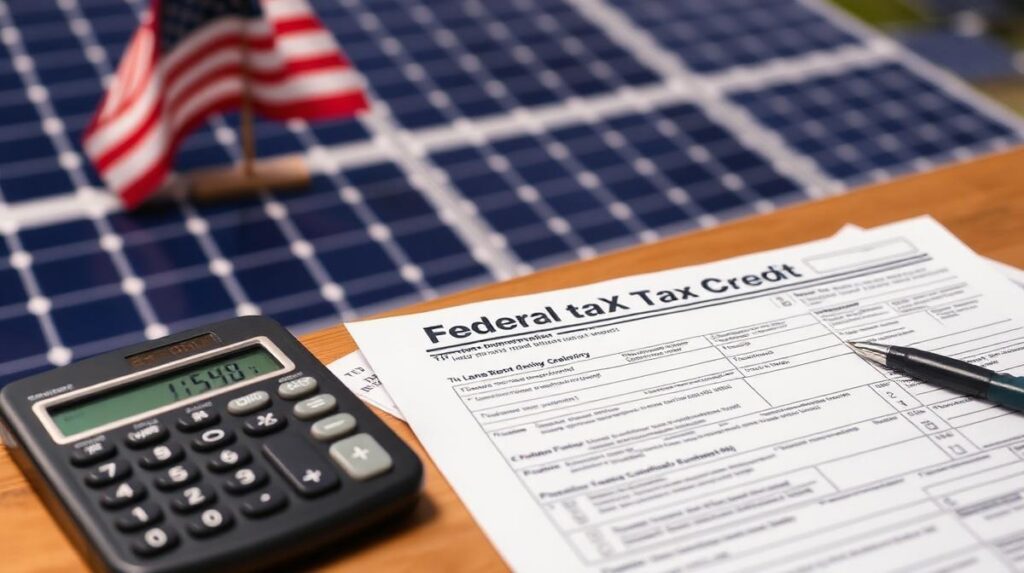
Section 25D

The 30% federal tax credit has ended

The residential clean energy credit, terminated on 31 December 2025. Systems had to be installed on or before that date to qualify. There is no federal tax credit for a Virginia homeowner who buys a system outright in 2026.

If your system was installed in 2025 or earlier and you have not claimed it yet, that is a question for your tax preparer, not for us. We install solar. We do not file returns.

Anyone still quoting you a 30% federal credit on a 2026 purchase is working from old information. Ask them to show you where it comes from.

The 30% federal tax credit has ended

Section 48E

What changes if you lease or sign a PPA

Section 48E, the clean electricity investment credit, is still in place. It belongs to whoever owns the system, which under a lease or a power purchase agreement is the provider, not you.

The deadlines on it are real. Solar projects have to commence construction on or before 4 July 2026, or be placed in service on or before 31 December 2027. Energy storage is not subject to that placed-in-service deadline. Third-party owned systems were not banned.

What that means in practice is narrower than it sounds. You do not claim 48E. The provider does, and whether any of it reaches your pricing depends entirely on how they have structured the deal. If somebody offers you a lease or a PPA on the basis that the tax credit is still available, the honest question to put to them is simple: show me how that credit changes what I pay.

A lease and a purchase are different products with different economics and different consequences when you sell the house. One is not a workaround for the other.

Net metering survived 2026, and that is the big one

Both of Virginia’s large utilities tried to cut net metering, and the State Corporation Commission largely said no. On the Dominion case, the Commission’s order took effect on 30 April 2026. It kept the twelve month netting period. It rejected Dominion’s proposal to net production against usage in thirty minute intervals. It rejected the application fee Dominion wanted to charge, which would have run between 100 and 750 dollars depending on system size. It did approve a new administrative fee of one dollar a month for customers on the new tariff, and it raised the rate paid for annual net excess generation above the old avoided-cost figure. Appalachian Power’s case went a similar way. Our Virginia page covers both rulings properly, including what each one preserved and what it changed. Residential net metering in Virginia is capped at 25 kW. That cap is the reason right-sizing a system to what your house actually uses matters more than filling the roof.
Net metering survived 2026, and that is the big one
Electricity bill savings

Your system is exempt from property tax

This one is straightforward and it is the clearest remaining incentive in Virginia.

Under the Code of Virginia, solar energy equipment of 25 kilowatts DC or less is wholly exempt from state and local taxation. No local ordinance is required at that size. A 2022 bill put residential installations under 25 kW into their own class of property for exactly this purpose.

Above 25 kW it becomes a local decision. A county or city may exempt the property, fully or partly, but only if its governing body has adopted an ordinance to do so. Whether yours has is worth a phone call to your commissioner of the revenue.

Certification runs through the local building department. Once certified, the exemption starts the following tax year and runs for at least five years. Some localities will backdate it to the installation date if certification happens within a year of install.

SREC Market

RECs, and what Virginia actually has

You will see other sites talk about selling SRECs in Virginia. The State Corporation Commission is direct about this: Virginia has no separate SREC market.

What Virginia has is renewable energy certificates, tracked in the PJM Generation Attribute Tracking System, usually just called GATS. There are two categories that matter. A Virginia REC can come from solar anywhere in the PJM region. A Virginia Distributed REC is narrower: solar only, located in Virginia, one megawatt or less. Every Distributed REC is also a Virginia REC, and the distributed designation opens a separate pool of demand.

For a home system the distributed category is the relevant one. Qualifying means meeting GATS metering standards, which include revenue grade metering, and applying for the distributed designation in GATS. Once registered you can sell through a broker or an aggregator, or manage the account yourself.

We are not quoting you a price for them, because REC prices move and anybody putting a confident figure on a web page is guessing at your expense. Ask us what the current market looks like when we do your assessment.

Getting the size right

What to check for your own address

We work through all of it at the assessment. Our Virginia page has the state level detail if you want to read ahead.

So what does this actually change about your numbers

A cash or financed purchase in 2026 costs what it costs. We show what that looks like in our Virginia solar cost and payback guide. The 30 percent that used to come back is not coming back. What is left is the ongoing side: net metering credits over a twelve month cycle, no property tax on the system, and whatever your RECs earn.

There is one more lever, and it is the one people skip. Cutting what the house wastes before sizing the array means a smaller system covering the same load. Insulation, air sealing and attic ventilation are unglamorous and they change the arithmetic more than most incentives ever did. We do that work too, and we would rather do it first.

Frequently Asked questions

Is there really no federal tax credit for solar in 2026?

Not for a homeowner buying a system. Section 25D ended on 31 December 2025 and systems had to be installed on or before that date. Section 48E still exists, but it belongs to the owner of the system, which on a normal purchase is you, and 48E is not a residential credit.

I installed in 2025. Did I lose anything?

No. The credit applied to systems installed on or before 31 December 2025. Talk to whoever prepares your return about claiming it. We are solar installers, not tax advisers, and we will not pretend otherwise.

Does Virginia have its own state solar tax credit to replace it?

No. Virginia’s remaining measures are the property tax exemption, net metering and the REC market. There is no state credit standing in for the federal one.

Will I pay more property tax because of the panels?

Not on a normal home system. Solar equipment of 25 kilowatts DC or less is wholly exempt from state and local taxation in Virginia. Above that size it depends on whether your locality has adopted an exemption ordinance.

Can I sell SRECs in Virginia?

Virginia does not have a separate SREC market. It has renewable energy certificates tracked in the PJM GATS registry, with a distributed category for in-state solar of one megawatt or less. Qualifying needs revenue grade metering and a GATS registration, and you sell through a broker or aggregator.

Did net metering survive?

Yes. Both large Virginia utilities tried to cut it in 2026 and the State Corporation Commission largely refused. The twelve month netting period was kept and the shorter netting interval Dominion wanted was rejected. Our Virginia page has the full account of both cases.

Is a lease or a PPA a way to still get the 30%?

It is a different product, not a workaround. The provider owns the system and claims the credit. Whether that reaches your pricing is between you and them, and the right question is to ask them to show you how it changes what you pay.

Book a no-cost energy assessment

We look at the roof, the panel, the shading and twelve months of your bills, then tell you what the numbers look like under the rules as they are now rather than as they were. Call 434-661-5656 or send the form.

Financial Incentives for Solar Panels

Did you know that according to the Solar Energy Industries Association, the price of solar in Virginia has declined 43% over the past 10 years?

Did you also know that you will never see that type of decline in your energy rates from your utility company? Rather, your power bills will keep rising!

While solar technology continues to improve and more incentives are made available, solar is becoming more affordable for homeowners. Not only does solar have a variety of financial benefits of its own, but there are also a myriad of government incentives that can be applied to solar projects to further decrease the price.

These financial incentives come from a variety of sources and are applied in different ways. While some help finance your solar system, others put money straight back into your pocket. Additionally, homeowners can enjoy the savings solar brings about naturally.

Financial Benefits of Going Solar

Even without looking at available programs and incentives, you can expect plenty of financial benefits from going solar. These include:

  • Reduced Power Bill: When you go solar, the energy your system produces will offset part, or sometimes all, of the power your home consumes each day. As a result, you will see a reduction, or potentially an elimination, of your monthly power bill.
  • Increased Energy Efficiency: Prior to installing a solar system on your home, we perform energy efficiency upgrades. These upgrades reduce your home’s energy waste, lowering the amount of power your home is using each month. As a result, your home will need a smaller and less expensive solar energy system to power your home.
  • Fixed Rate: Utility companies aren’t ever going to stop raising power rates. When you go solar, you secure a low, fixed rate for your energy that will never go up. No more unexpected rate increases!
  • Home Equity: Every payment you make on your solar system goes right back into your pocket by increasing your home equity. A 2019 Zillow study found that, on average, solar increased a home’s value by 4.1%. If you ever sell your house, then you can reflect the value of your solar system in your home’s price.

Financial Incentives for Going Solar

Beyond the natural financial benefits that solar provides, there are also a variety of incentives that further decrease the overall cost of going solar. Renewable energy is better for the environment and reduces strain on the grid. Because of this, the government is encouraging homeowners to go solar by offering financial incentives that make it more affordable.

  • 30% Tax Credit: The federal government offers a 30% tax credit on the total cost of your solar project. You can choose to apply this money towards the cost of your solar project or use it for other things.
  • Net Metering: The net metering program is available to homeowners on Appalachian Power, Dominion, or their subsidiaries. Net metering allows homeowners to store excess power produced by their solar system on the grid instead of relying on an expensive solar battery.
  • SRECs: Every time your solar energy system produces power, you earn SRECs: Solar Renewable Energy Certificates. You can sell these SRECs on the SREC market, much like stocks or cryptocurrency. They are valuable to utility companies who are required to sponsor a certain amount of renewable energy. For you, however, it’s basically free money just for going solar!

These incentives and financial benefits greatly reduce the cost of solar. Additionally, they increase ROI and make it easier for homeowners of any financial situation to switch to renewable energy. The incentives mentioned above are available to Virginia residents, though some qualifications may be necessary. When you go solar,  research the incentives and financial benefits available in your specific state or region, as these vary based on location.

If you go solar with Earth Right Mid-Atlantic, then we will ensure that you are set up to participate in as many incentives and programs as possible to maximize your solar savings. We want you to enjoy all of the financial benefits that solar has to offer!

Aerial view of rooftop solar panels after ten years of use
Home with lights on at night during a power outage
Solar panels on a Virginia home that adds resale value
Completed residential solar installation in Altavista, Virginia
Call Us